
Listen to Luke Johanni speak about this article on the Mind and Spirit Podcast!
The Silent Struggle of Men: Explore how Catholic teaching and modern psychology together offer a path to healing.
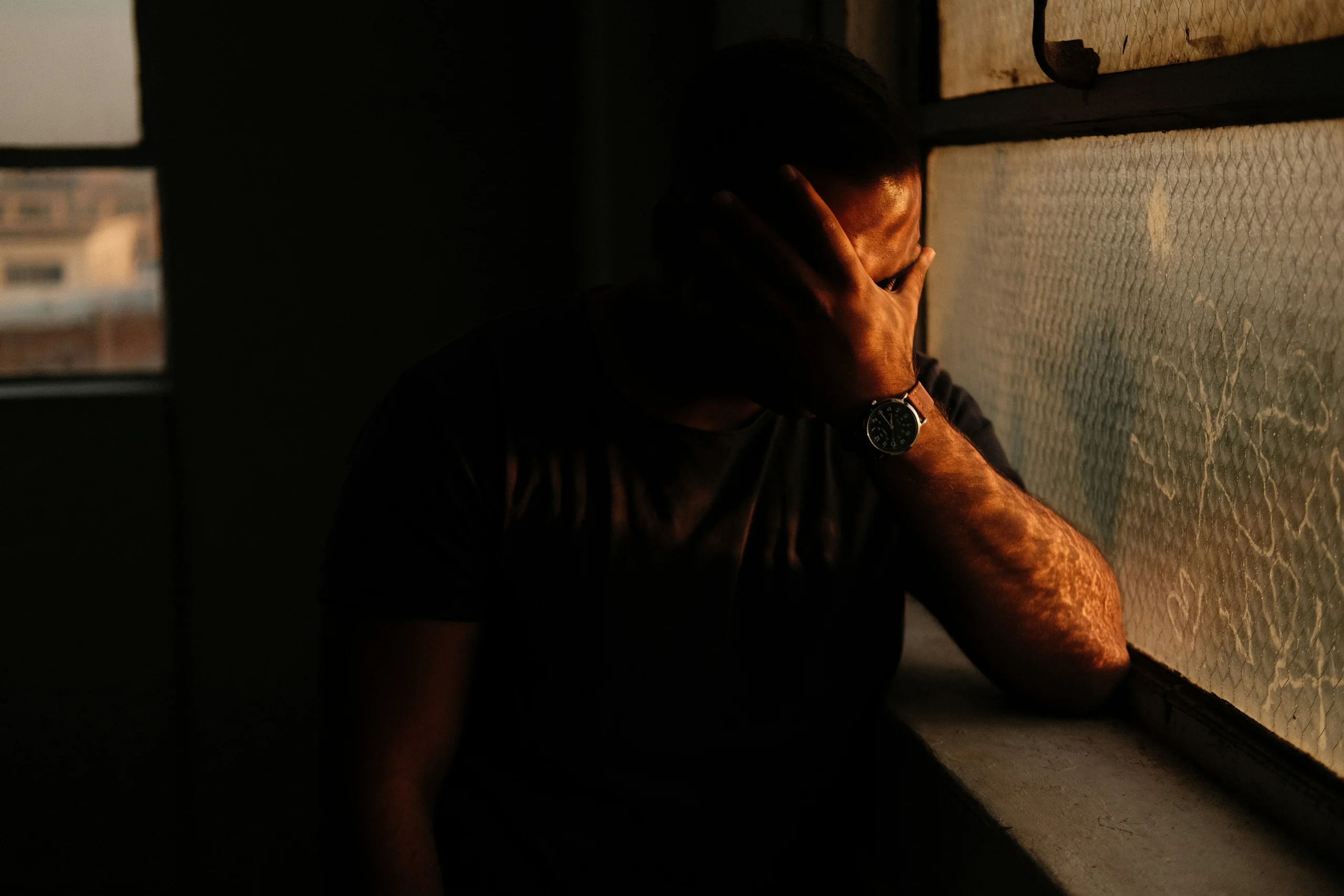
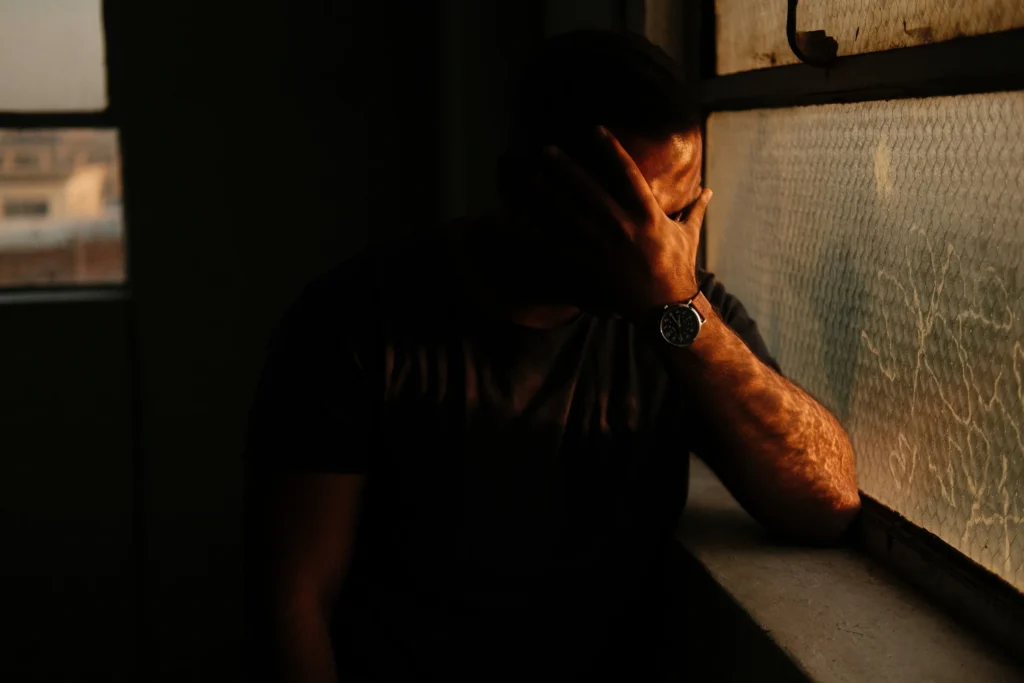
But when someone asks, “How are you, really?” We just shrug and say we’re fine.
Welcome
Hey friends! Welcome back to Mind and Spirit, the podcast where Catholic faith meets psychology and we explore what real healing looks like. I’m Luke Johanni, your Catholic-integrated therapist; helping you bridge faith and mental health so you can find peace, purpose, and restoration.
Don’t forget to subscribe, follow @LukeJohanni on social media, and visit RestoredChristianCounseling.com to submit your questions—they might even be featured in a future episode.
Let’s dive in.
The Reality: The Hidden Epidemic
Today, we are talking about men’s mental health and the stigma that has led us to the point where less than half of men with a true mental health conditions seek treatment or help. The suicide rate for men is a serious concern and this topic needs to continue being talked about.
So, have you caught yourself wondering why men are so good at not talking about our emotions and holding it all together, on the outside, yet carry the weight of it all in silence. Men will go to work exhausted, show up for everyone else and still crack a joke when things are tense. But when someone asks, “How are you, really?” We just shrug and say we’re fine.
The Numbers
It’s strange when you stop to think about it. Let’s look at some of the statistics,
- There are roughly 166 million men in the US.
- Of those men, 1 in 10 men (nearly 17 million) wrestle with depression or anxiety.
- More than 6 million men (in the US) have reoccurring depression
- More than 3 million men live with panic disorders.
- Men and women have the same chance and rate of developing bi-polar disorders.
- 10% of eating disorders like anorexia or bulimia are men.
- Men make up 90% of those over the age of 30 with diagnosed schizophrenia.
- 2 in 10 men (which is over 33 million) struggle with any form of mental illness.
- 2 in 10 men (roughly 33 million) develop substance use disorders (which is 1.5 to 2.3 times that of women.)
- Men are almost 4x more likely to die by suicide than women.
- And yet, less than half (about 40%) of men will ever reach out for help, (while about 60% of women will seek out help).
How Men Process
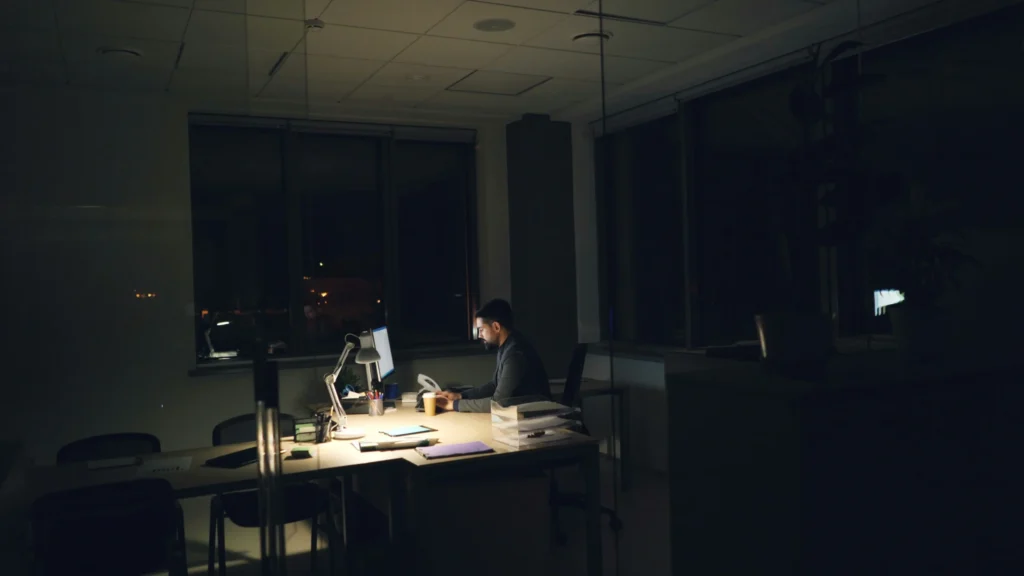
What this tells us is that men are not hurting less, they are handle the pain alone. For men, their silent struggle doesn’t generally look like sadness. It looks more like pouring yourself into work, staying at the office (so you don’t have to feel lonely, rejected, or attacked at home). Or it could look like pouring another drink when the day is finally over and zoning out in front of the tv (because you subconsciously) don’t want to sit with your thoughts.
If you have ever sit alone in your car after a long day at work, stare at your phone but not really see what’s on the screen, or doom scroll, you feel or have felt that heaviness. If you’ve said “I’m fine” when you’re anything but fine, you are not alone As I said, that’s what over 50% of men do.
The Silent Struggle
But this isn’t healthy processing and it often leads to long term devastating effects on your own self-esteem and your relationships (as a son, husband, father, friend, and even co-worker). So, this is the silent struggle of men. And I challenge men, who are listen, give what I say a fair chance. Let these works sink in, and think where does this speak to me and what should I do now?
1 in 10 men (nearly 17 million) wrestle with depression or anxiety.
The Cause: How We Got Here
The problem occurs, when pain doesn’t have a place to go, it doesn’t disappear. It leaks out in ways we don’t expect.
Parents
Now I want you to think back to how you were raised. Did you hear “Man up.” “Shake it off.” “Don’t cry, crying is weak.” I don’t believe that our parents, dads, grandfathers, were say this to be cruel. It was the world they knew, and how they had been raised to respond.
These past generations endured wars, losses, and economic hardship (generally without) being taught the knowledge or skills for responding in a healthy way. They coped with their stress, doing the best they could with what they were given. But the message handed down through the generations is to “Suck it up and keep going.”
Surviving Not Living
At its core, this approach is only surviving in life; not thriving. It’s a stoic work ethic and a silent approach to pain. And to be clear, there’s honor in that grit, but the silence can become a both a bad legacy and a pit that leads us away from Christ like behavior and into vices.
We might have learned how to provide and protect but not how to process what’s happening inside.
We can fix just about anything except what’s going on in our own hearts.
We inherited the idea that emotions are weakness, that real men are islands.
It’s no wonder so many of us feel like we’re supposed to handle everything without needing anyone. The problem occurs, when pain doesn’t have a place to go, it doesn’t disappear. It leaks out in ways we don’t expect.
What Silence Becomes
For every 10 men that listen to this episode, statistically, about two will have binge drank this past month.
Bottling Up
And that’s how our silence has a way of changing shape. When you can’t talk about fear, shame or loneliness, those feelings don’t just vanish. You bottling them up and they will morph into something. Maybe its anger, addiction, porn use, cheating, snapping at your kids over something small, or temper flares at work over minor mistakes. Or you notice you’re drinking more than you used to, not because you enjoy it but because it dulls the pain or loneliness.
Drinking
In 2024, the National Institute of Alcohol Abuse and Alcoholism (NIAAA) reported that 31.8 million men binge drank the prior month. That means for every 10 men that listen to this episode, statistically, about two will have binge drank this past month. And again, men do this at a higher rate than women.
So, what have we done when we were overwhelmed? Did we dive headfirst into work, a screen, or porn, just to feel numb, feel good, or in control.
Loneliness
Studies show that loneliness is related to men who turning to pornography. In one study, researchers found that men who viewed pornography were more apt to feel lonely, and lonely men were more likely to view pornography.
And my point here, isn’t that we’re bad men; it’s that we’ve never truly been taught or trained in a healthier way of life.
If you’ve ever wondered why your anger flares so quickly, or why you feel empty even when everything looks good from the outside, it’s not about being weak. It’s about the outlet that silence gives us to avoid truly confronting our struggles.
Redefining Strength
Somewhere along the line we decided to accept the lie that silence is strength. That real men handle it all, alone. But, what if strength really looked different
Think: It takes courage to admit, “I’m not okay.” It takes guts to sit across from a friend or a counselor and be honest about what’s really going on. That kind of vulnerability isn’t weakness; it’s the wisdom to know what you really need. Which is support. The moment you speak your pain out loud, it loses some of its power over you. And you realize you don’t have to carry it alone.
Think about it: even Jesus didn’t carry His cross alone. Simon of Cyrene stepped in to help Him shoulder it. If the Son of God allowed someone to assist Him in His greatest struggle, why do we think we have to be self‑contained?
What Men Are Called To
To think that we can do anything in this life alone, will lead to failure.
If you look at Scripture, it does not tell men to bury their pain. Instead, it calls us into relationship and community. Galatians 6:2 says, “Bear one another’s burdens, and so fulfill the law of Christ.” That’s a command to share our struggles with each other, not hide them.
Restraint
Now, I’m not saying every time we stay quiet it’s wrong. Sometimes restraint is love. Maybe you’ve “sucked up” how you’ve felt. And told yourself, “hey, this is an act of love and selflessness.” I’m gonna challenge you here. Consider, “Is it?” Sometimes it certainly is, but are there other vices your turning to?
For example, if we are depressed in our marriage. If we avoid conflict and speaking our own thoughts. And especially, do this under the guise of I just want her to be happy or there’s no point in trying. We are doing both her and ourself a disservice. Of course, in certain circumstances this does need to happen (putting our needs aside for our wife’s). But if that is our general rule and way of responding, honestly, long term, we’re going to lose ourself and her by avoiding the conflict. What often comes with that are vices. We start drinking more, or get angry faster, resenting her, or using porn.
Strong Where It Counts
We need to be strong where it counts. Bottling it up, for the most part, is avoidance. If we are taking true responsibility for ourselves, leaning into being strong men we will be able to feel the spectrum of emotions, be self-regulated, be vulnerable, and not lose ourself in either direction.
If we are thinking that bottling up and saying “I can handle this. I don’t need anyone. I can do this by myself,” I caution you to reflect, is that honest strength or a hidden disguised form of pride. To think that we can do anything in this life alone, will lead to failure. And pride comes before any fall. A fall into a vice and a fall into despair. The truth is that we can’t do this alone, we need God and each other. Proverbs 27:17 tells us this, “as iron sharpens iron, so one man sharpens another.”
Brotherhood
The early disciples were far from perfect. They doubted, they fought, they failed. But they were real with each other. They didn’t live in isolation; they leaned on one another and let themselves be known. We’re called to the same type of brotherhood: to lift each other up, to be honest about our weaknesses, and to support one another through them. It’s not about being flawless; it’s about being faithful to God, ourselves, our spouse, and our families.
So, isolation isn’t a badge of honor. And independence for its own sake can become its own prison. But as Scripture reminds us, we are not meant to fight these battles alone. When we redefine strength as honesty and seek connection rather than isolation, we can open the door to real healing. We choose relationship and brotherhood over isolation.
What Healing Actually Looks Like
Healing means the things that once controlled you (the anger, the addiction, the shame) lose their grip on you.
So what happens when we stop hiding and start healing? It’s not some magic formula that makes life perfect. Healing looks like small, tangible shifts. It’s sleeping through the night for the first time in months. It’s taking that first step to end your addiction. It’s that first deep breath that feels easy. It’s noticing that your shoulders aren’t constantly up by your ears anymore.
Physically, when we talk and process emotions, our bodies relax. Our heart rate slows, stress hormones drop, and we move out of survival mode. Spiritually, something beautiful happens too. We realize that God isn’t disappointed in us for being human; He’s waiting for us to come to Him honestly. He isn’t impressed by our toughness; He’s moved by our honesty and openness. He wants our hearts, not merely our white knuckles.
Healing means the things that once controlled you (the anger, the addiction, the shame) lose their grip on you. You’ll still be the same man, but you show up with more peace and presence. Your family notices the difference. Your friends feel it. And slowly, you start to feel it too. And you will live rather than just survive.
The Call to True Strength
Maybe it’s time to rethink what strength looks like. It’s not about how much weight you can carry alone. It’s knowing when to put something down.
The silence keeps building pressure until it bursts, often hurting the people we love most. While, honesty releases that pressure. It doesn’t fix everything overnight, but it’s the first step toward real growth.
You don’t need to keep fighting battles no one else knows about. Surviving isn’t the same as living. Maybe for you, taking a stand for your own health looks like having a real conversation with a friend. Maybe it’s scheduling that counseling appointment you’ve been avoiding. Maybe it’s taking a walk and telling God, “I don’t know what to do, but I’m tired of bottling it up and pretending.”

A Closing Invitation
Whatever that step is, take it. Because when you get healthy, you have so much more to offer to your family, your friends, your work, to the world. You were never meant to do life alone.
Next Time
And come back next week as we continue to talk about men’s mental health and learn new techniques for becoming the most true version of ourself.
Remember
You were never meant to do life alone. So, let your strength this week be humility. Let it be healing. Let it be a new story that begins by choosing to speak.
Prayer
Let’s Pray
Jesus,
Thank You for reminding us we were never meant to walk alone.
For every man carrying more than he can say; meet him in that quiet place.
Give us courage to be honest, to reach out, to lift one another up.
Teach us that real strength isn’t silence.
And when we forget, remind us of Your Son, who carried His Cross and how he let someone help Him.
In Jesus’ name,
Amen.
Closing
Thanks so much for spending this time with me on Mind and Spirit. If today’s episode spoke to you, don’t rush past it. Take a quiet moment to breathe and let God meet you right where you are.
If this episode encouraged you, I’d love for you to subscribe, leave a review, and share it with someone who might need it. Your support not only helps this show grow. It helps more people find hope and healing through faith.
To connect with me personally, follow and message me on Instagram @LukeJohanni, or visit RestoredChristianCounseling.com for more resources.
And if you have a question you’d like me to answer in a future episode, just head to the Podcast page on my website and submit it. I’d love to hear from you.
I’m Luke Johanni, and this has been Mind and Spirit. Until next time, may the peace of Christ be with you.
Sources/Resources
- Galatians 6:2
- Proverbs 27:17
- Proverbs 16:18
- Luke 23:26
- SSM Health. (2023, June). Mental Health: A Men’s Issue Too.
- Centers for Disease Control and Prevention (CDC). (2024). Data on Excessive Alcohol Use.
- Centers for Disease Control and Prevention (CDC). (2025). Alcohol Use and Sex-Based Differences.
- National Institute on Alcohol Abuse and Alcoholism (NIAAA). (2024). Alcohol-Related Disease Impact Data.
- Our World in Data. (2025). Suicide Rates Are Higher in Men Than Women.
- Psychology Today. (2021, Sept 1). The Link Between Pornography and Loneliness.

How Porn Hijacks Your Life (and How to Break Free)
Authentic Masculinity: Strength Ordered To Love
The Silent Struggle of Men: Finding a New Strength
When God Feels Far: Why You Feel Abandoned and How to Find Him Again (Part 2)
When God Feels Far: Why You Feel Abandoned and How to Find Him Again (Part 1)

Healing Trauma: With Psychology and Faith (Part 2)

Healing Trauma: With Psychology and Faith (Part 1)

Healing Scrupulosity and OCD: A Proven Path of Faith
The Truth About Anxiety: One Size Doesn’t Fit All
Breaking Free from Shame: The Power of Faith and Psychology

Mind and Spirit: From Brokenness to Calling
Have a question? Want it answered?
Submit your question below and it maybe answered on the Mind and Spirit Podcast and in this Blog. If you’d like a personal email response, please include your email.*
*Please note: Submitting a question through this form does not constitute therapy, nor is it intended to. It does not establish or initiate a therapeutic relationship. Learn more in our Privacy Policies.
Follow me on Instagram and Facebook or subscribe to the blog for weekly encouragement.