
Listen to Luke Johanni speak about this article on the Mind and Spirit Podcast!
How Porn Hijacks Your Life: Explore how Catholic teaching and modern psychology together offer a path to healing.
Repeated viewing of explicit scenes at these fragile development times can wire neural pathways toward depersonalized and compulsive use
Welcome
Hey friends! Welcome back to Mind and Spirit, the podcast where Catholic faith meets psychology and we explore what real healing looks like. I’m Luke Johanni, your Catholic-integrated therapist; helping you bridge faith and mental health so you can find peace, purpose, and restoration.
Don’t forget to subscribe, follow @LukeJohanni on social media, and visit RestoredChristianCounseling.com to submit your questions—they might even be featured in a future episode.
Let’s dive in.
The Issue of Pornography
In the last episode we talked about authentic masculinity; that a man grows into maturity not by dominating or by suppressing his emotions but by learning to order his strength toward self‑giving love.
This week we turn to one of the biggest forces working against that maturation: pornography. Porn promises instant pleasure and liberation, yet countless men find themselves trapped in this habit that leave them feeling empty, out of control, and ashamed.
And the issue is not confined to a small, hidden group. A recent Barna Group survey found that roughly three‑quarters (75%) of Christian men and about 40 percent of Christian women acknowledge viewing pornography, numbers that are only slightly higher for the general population.
This is not an episode about blame or moralizing. This is about the psychology, the neuroscience, the lived experience, and hope. Because healing is possible. Freedom is possible.
How Porn Hijacks Our Life
1st Porn Hijacks Our Hormones
Why is pornography so appealing?
Research has shown, that when men feel lonely, stressed, rejected or anxious, a few clicks on a phone or laptop offer a powerful chemical escape. Videos and images trigger surges of dopamine (the brain’s reward chemical), while requiring (pretty much) nothing in return. Over time the brain adapts and begins to crave more novelty and more intense imagery to achieve the same high.
This “Coolidge effect” (as its been called) is described by neuroscientists and popularized in the book Your Brain on Porn helps explain why occasional viewing easily spirals into compulsive cycles. Because porn is anonymous, accessible and available in endless variety, it creates a kind of (shall we say) “safe intimacy” that seems to protect the user from rejection or vulnerability while gradually rewiring his mind.
Now let’s look at a few ways in which porn, hijacks us.
2nd Porn Hijacks Your Development
The cultural tide has shifted, and unless we help young people understand what they are seeing and how it affects them, that tide will shape their identity long before they know how to navigate it.
Early Exposure
Porn starts by disrupting our development. The pervasiveness of pornography means that most people are exposed at very young ages.
Fight the New Drug reports that the likely age for first exposure is during the tween years and that most children see pornography by age 13, with some exposed as young as seven. A nationally representative study of U.S. teens aged 14–18 estimated that 84.4 percent of boys and 57 percent of girls had viewed pornographic material. Some studies even document children encountering pornography as early as five years old.
Becomes Coping
Early exposure is deeply concerning because of the developing adolescent brain; repeated viewing of explicit scenes at these fragile development times can wire neural pathways toward depersonalized, compulsive use and can shape a person’s expectations of sex long before he or she understands intimacy.
Additional, during these years of development, children are learning how to rationalize and how to emotionally respond to life’s stressors. Research shows, that this earlier pornography use, stunts the developmental growth of children in both their higher functioning and emotional regulation.
Resulting in children, who become teens and then adults, NEEDING the hyper-stimulation of pornography and sexual behavior to carry on with what would be considered normal daily life stressors.
The Concern of Access
We’re living in a culture that is becoming more sexualized every year. Not only has nudity and sexual content increased across TV, movies, music videos, and even advertising, but kids now carry an entire media universe in their pockets.
Ninety-five percent of teens have smartphones, and almost half report being online “almost constantly.” Younger kids aren’t far behind. 42% of children ages 8–12 have their own smartphone, and they now average nearly five hours of screen time a day, not including schoolwork.
When you combine that level of access with platforms where sexualized content is only a scroll away, the chances of a child or teen encountering explicit material, intentionally or unintentionally, are higher than ever. This is not about one website or one bad choice; it’s about growing up in an ecosystem where sexual content is increasingly normalized, algorithmically pushed, and harder than ever to avoid.
The cultural tide has shifted, and unless we help young people understand what they are seeing and how it affects them, that tide will shape their identity long before they know how to navigate it.
Impact on Faith Communities
The widespread nature of pornography also means that it’s shaping attitudes within faith communities.
According to the Barna Group’s 2024 report Beyond The Porn Phenomenon, roughly 75 percent of Christian men and 40 percent of Christian women admit to using pornography (at least monthly). Christian pastors are not immune either: two‑thirds report having struggled with porn in the past.
These numbers underscore that porn use is not a fringe problem; it is a mainstream reality even among those who take faith seriously.
3rd Porn Hijacks Your Relationships
Statistically 1 in 3 pornographic videos contains violence and aggression.
A third way that porn hijacks our life through objectifying others. It distorts our relationships, including wife, family, friends and God.
Long-term exposure to pornography affects the brain and the heart. Neurologically, repeated consumption desensitizes your dopamine receptors, so that ordinary pleasures (a hug, a conversation, a meal) feel dull by comparison. So, your brain begins to prefer “artificial” stimulation over real connection.
In relationships, porn encourages objectification. Statistically 1 in 3 pornographic videos contains violence and aggression. This constant stream trains the viewer to see people as parts and performances instead of real people. Research has further linked early and frequent porn consumption with increased acceptance of violence against women and with greater sexual aggression.
This one may make sense to many of you without further explanation. But it does deserve a conversation. As that is, I won’t dive deeper into this today, because I am planning to do an episode on just this in the future.
4th Porn Hijacks Your Cognitive Function
A fourth way that porn hijacks our life is through distorting our cognitive functioning.
Pornified Worldview
When porn use begins in childhood or adolescence, we often see the development of what some authors call a pornified worldview. This means that repeated exposure to objectifying, unrealistic sexual content has trained the brain to interpret the world through a sexualized lens, even in situations that aren’t sexual at all.
It becomes an automatic filter.
Example
Think of walking through Walmart: a woman passes by, and before you even realize it, your eyes scan, compare, and sexualize specific parts of her body. In that moment, your brain wasn’t engaging with her as a whole person.
It was running a conditioned script. And many men don’t even notice they’re doing it until they mentally step back and check themselves. Repeated exposure wires the brain toward objectification, unless intentional healing and re-training occur.
When porn use begins in childhood or adolescence, we often see the development of what some authors call a pornified worldview.
5th Porn Hijacks Your Identity
Porn also distorts self‑concept. Many men describe feeling “split” within themselves. They know their use conflicts with their values yet feel unable to stop. Shame follows the rush like relief, leading to secrecy, deeper isolation and, paradoxically, more compulsion.
To visualize this, think Trigger → Urge → Use → Dopamine relief → Shame → Isolation → More distress → Repeat
Most men try to break this cycle with willpower alone. But willpower fails because the cycle isn’t merely moral; it’s neurological and emotional. You cannot shame or hate your way out.
Now, with this knowledge of the five ways that porn hijacks us, what can we do about it?
Breaking the Cycle
Healing begins with understanding this cycle and taking small, concrete steps to disrupt it. So, let’s get concrete. Here are five evidence-based steps from Cognitive behavioral therapy (CBT) and acceptance and commitment therapy (ACT), plus one relational step, to start rewiring your brain and rebuilding your integrity.
Frist Step: Awareness
The first step is awareness. Keep a log of urges: note the time, what you were feeling, and what happened right before the urge. Patterns will emerge. You may discover that boredom, stress or loneliness are the real triggers, not sexual desire.
A great free tracker is the Fortified App. There are things you can pay for on the app, but tracking and a lot of the analytics are free.
Second Step: Urge Surfing
The second step is urge surfing. Urges are like waves; they crest and then subside. When you feel the impulse to watch porn, pause and tell yourself, “I’m noticing an urge; it will pass.” Practice breathing or mindfulness for ninety seconds (the typical urge) until the urge peaks and recedes.
Third Step: Challenging Thoughts
The third step is challenging your thoughts. Pornography thrives on distortions, unrealistic or skewed thoughts such as: “This is harmless,” “I deserve this,” “I can’t stop.”
Replace these with truths: “this will not give me the connection I crave,” “my brain can change.”
Fourth Step: Retraining the Reward System
The fourth step is re‑training your reward system. Replace screen time with healthy activities that provide a sense of accomplishment or joy. These can include exercise, cold showers, journaling, prayer, calling a friend, finishing a task.
Over time these small choices rewire the brain toward authentic satisfaction.
As an important note, be careful of a common mistake with those trying to end their habitual use. Don’t fall into the mental cycle of saying, “I just need to stop.” This can be a slippery slope of white knuckling through the urges and not doing Step Four, replacing the habit with new rewarding experiences.
Whether this was born out of curiosity or coping, it has been meeting a basic need for you over the years. You can’t simple remove it and not replace it, without running the probable risk of falling back into it.
Fifth Step: Invite Accountability
Fifth, invite accountability. Software filters can create health boundaries, but lasting change rarely occurs without honest conversation with a trusted friend, mentor, therapist or faith leader. Secrecy fuels shame; but honest connection breaks it.
Resources
For listeners who want deeper insight into the psychological side of porn addiction, Gary Wilson’s book Your Brain on Porn is a helpful primer. Another valuable resource is The Porn Trap by Wendy and Larry Maltz, which offers practical guidance on breaking compulsive use and rebuilding trust in relationships. Faith‑based programs like Covenant Eyes and community groups can also provide helpful structure and support.

Catholic Integration
Sexual intimacy is meant to be a complete and faithful gift of oneself; a union in which the body expresses the total, self-giving love the person commits with the heart, mind, and will.
Chastity
From a Christian perspective, freedom from pornography isn’t about repression but about integration. The Catechism of the Catholic Church teaches that chastity is the “successful integration of sexuality within the person;” meaning our desires are ordered toward love of the person, not their consumption or use as an image.
Chastity is about becoming whole, rightly ordered, and capable of love.
Church on sexuality
St. Paul reminds us that God’s will is our sanctification, not our shame (1 Thessalonians 4:3–5). And when Jesus says, “Blessed are the pure in heart,” In this context, this isn’t about flawless perfection; it’s about being undivided. Porn divides the heart that was created for self-giving love.
The Church teaches that sexual intimacy is meant to be a complete and faithful gift of oneself; a union in which the body expresses the total, self-giving love the person commits with the heart, mind, and will.
Pornography and masturbation distort this design by turning the sexual act into something self-referential and self-gratifying. This is desire split from dignity, pleasure split from authentic giving of oneself.
I could go on and on, about the proper understanding of our sexuality here. But I will save that for another podcast at some point in the future.
Confession
Now, Christ does not shame us; he heals us. Confession and prayer are tools of honesty and grace. Confession isn’t merely a reset button; it’s part of a relationship of mercy. It’s where we tell the truth to God so that Grace can do what willpower cannot.
Virtue vs. Vice
Before closing, here’s a final recommendation: practice the counter-virtue of your vice. Whatever temptation pulls you inward toward selfishness, do the outward, loving opposite.
If your temptation is to take, then give. If your temptation is to yell, then speak gently. If your temptation is to consume sexual content for self-gratification, respond with a concrete act of charity: do the dishes, play with your kids, send an encouraging message, or give to someone in need.
Vice collapses the heart inward; virtue opens the heart outward. When temptation calls you toward self-indulgence, respond with self-gift.
Here’s a final recommendation: practice the counter-virtue of your vice.

A Closing Invitation
As we close, remember that freedom comes through small, honest steps. You might begin tonight by writing down your triggers or by telling one trusted person. You could install a filter, commit to a ninety‑second pause when urges arise, or choose a healthy alternative activity.
Remember
You are not your search history. You are a man called to order his strength toward love. With grace and effort your heart and mind can be restored.
Prayer
Let’s Pray
Lord,
You know our hearts and our struggles.
Bring light where there is shame,
strength where there is weakness,
and healing where we feel divided.
Teach us to love as You love,
to choose virtue over vice,
and to rise every time we fall.
Make our hearts whole and ordered toward You.
Amen.
Closing
Thanks so much for spending this time with me on Mind and Spirit. If today’s episode spoke to you, don’t rush past it. Take a quiet moment to breathe and let God meet you right where you are.
If this episode encouraged you, I’d love for you to subscribe, leave a review, and share it with someone who might need it. Your support not only helps this show grow. It helps more people find hope and healing through faith.
To connect with me personally, follow and message me on Instagram @LukeJohanni, or visit RestoredChristianCounseling.com for more resources.
And if you have a question you’d like me to answer in a future episode, just head to the Podcast page on my website and submit it. I’d love to hear from you.
I’m Luke Johanni, and this has been Mind and Spirit. Until next time, may the peace of Christ be with you.
Sources/Resources
- Beyond the Porn Phenomenon (2024) — Barna Group
- Covenant Eyes – Porn Statistics Summary
- Fight the New Drug – Early Exposure & Teen Porn Use Stats
- A Look Into Teens’ Exposure to Pornography
- How Early Exposure Impacts the Brain
- Your Brain on Porn — Gary Wilson
- The Coolidge Effect — Academic Background
- The Porn Trap — Wendy & Larry Maltz
- Teen Smartphone & Internet Usage — Pew Research Center
- Teens, Social Media and Technology
- Children’s Screen Time & Smartphone Ownership — Common Sense Media
- The Common Sense Census: Media Use by Tweens and Teens
- Porn & Violence Statistics
- Theology of the Body — John Paul II

How Porn Hijacks Your Life (and How to Break Free)

Authentic Masculinity: Strength Ordered To Love
The Silent Struggle of Men: Finding a New Strength
When God Feels Far: Why You Feel Abandoned and How to Find Him Again (Part 2)
When God Feels Far: Why You Feel Abandoned and How to Find Him Again (Part 1)

Healing Trauma: With Psychology and Faith (Part 2)

Healing Trauma: With Psychology and Faith (Part 1)

Healing Scrupulosity and OCD: A Proven Path of Faith

The Truth About Anxiety: One Size Doesn’t Fit All
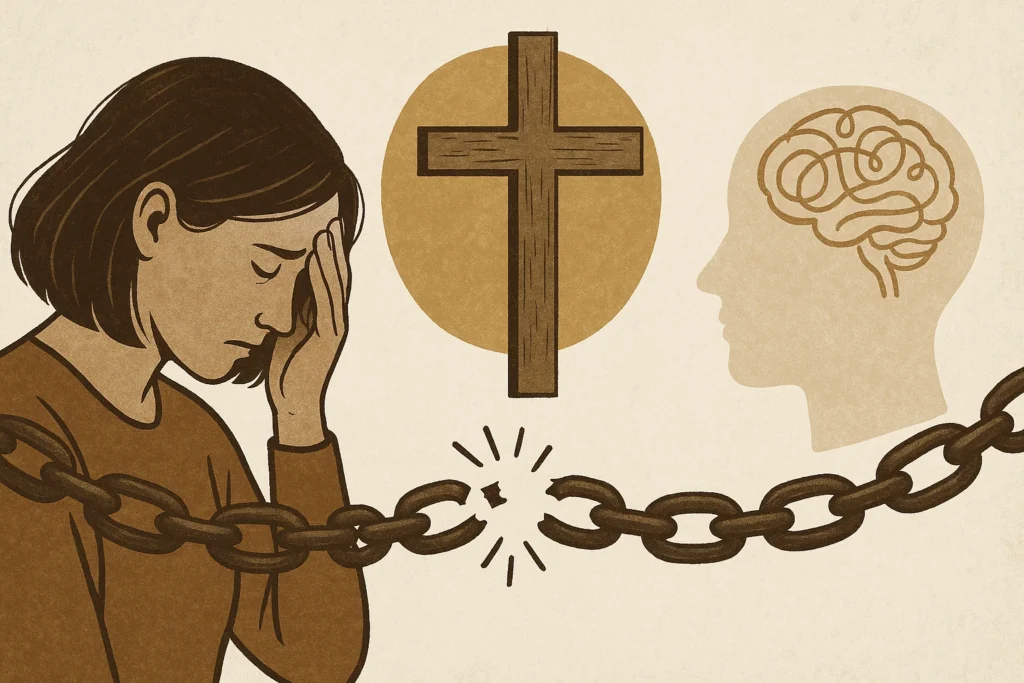
Breaking Free from Shame: The Power of Faith and Psychology

Mind and Spirit: From Brokenness to Calling
Have a question? Want it answered?
Submit your question below and it maybe answered on the Mind and Spirit Podcast and in this Blog. If you’d like a personal email response, please include your email.*
*Please note: Submitting a question through this form does not constitute therapy, nor is it intended to. It does not establish or initiate a therapeutic relationship. Learn more in our Privacy Policies.
Follow me on Instagram and Facebook or subscribe to the blog for weekly encouragement.