
Listen to Luke Johanni speak about this article on the Mind and Spirit Podcast!
Authentic Masculinity: Explore how Catholic teaching and modern psychology together offer a path to healing.
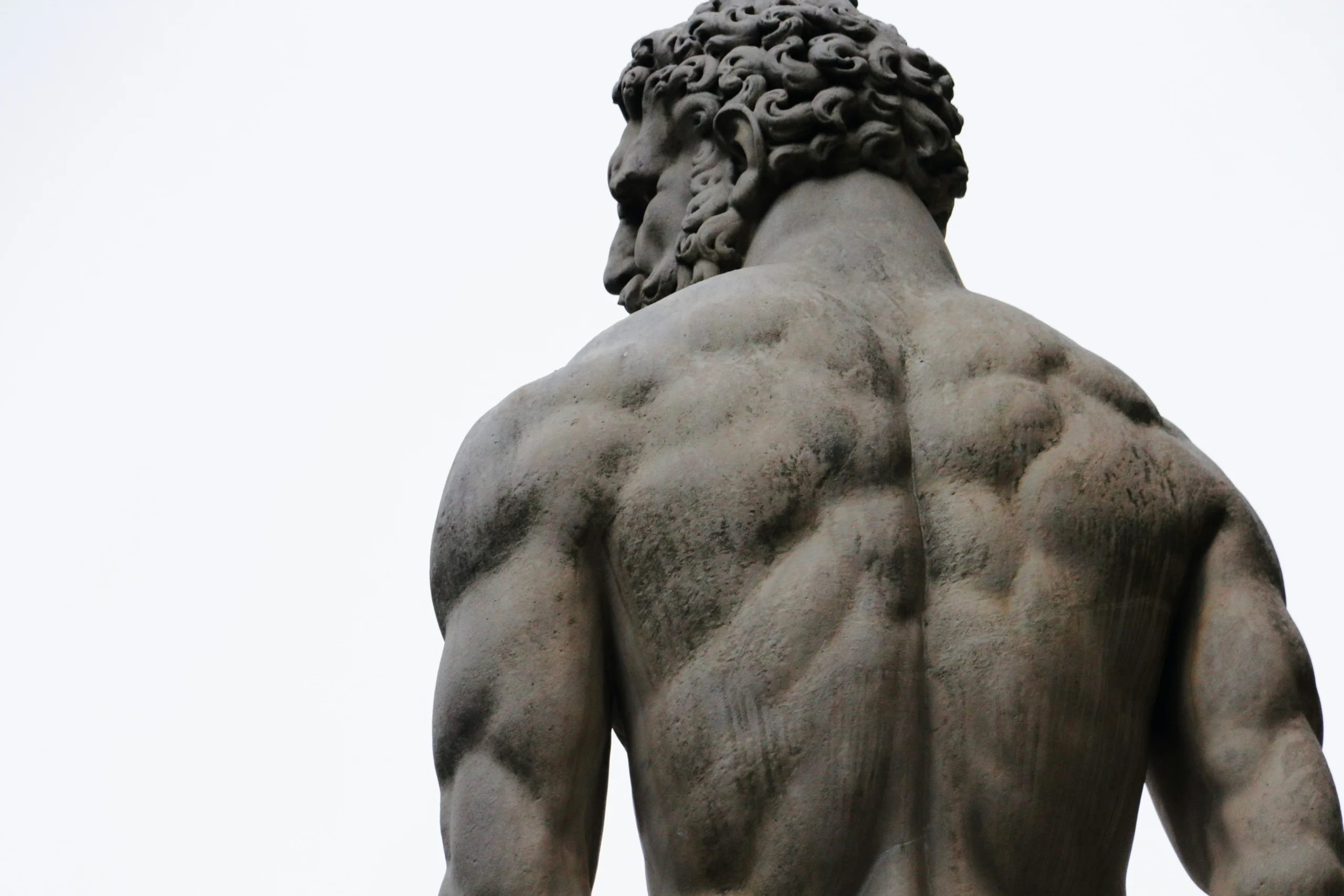
A man becomes a man not by domination, not by self‑invention, and not by pretending emotions don’t exist.
Welcome
Hey friends! Welcome back to Mind and Spirit, the podcast where Catholic faith meets psychology and we explore what real healing looks like. I’m Luke Johanni, your Catholic-integrated therapist; helping you bridge faith and mental health so you can find peace, purpose, and restoration.
Don’t forget to subscribe, follow @LukeJohanni on social media, and visit RestoredChristianCounseling.com to submit your questions—they might even be featured in a future episode.
Let’s dive in.
What Is Masculinity?
Someone recently asked me what seemed to be a simple question: “What are the core attributes of being a man? What does masculinity really mean?”
I started to answer with the usual phrases many of us grew up with: be a provider, be strong, be a leader. But I stopped. Deep down those familiar answers didn’t capture what the man was really asking.
Instead of reciting these, I told him this: A man becomes a man not by domination, not by self‑invention, and not by pretending emotions don’t exist; but by learning how to order his strength toward selfless love.
He stared at me like he’d never heard anything like that before. Honestly? Most men haven’t.
Today, men are torn between four competing visions of masculinity: a patriarchal model from tradition, a machismo tough‑guy ideal, the cultural concept of “toxic masculinity” and a postmodern idea that masculinity means whatever you want it to mean. It’s no wonder we feel confused.
Yet, there is a way through the noise. In this episode, we’re going to sort through each of those models, bring in voices like C. S. Lewis and Saint John Paul II, and build a vision of authentic masculinity that is psychologically grounded, theologically sound and actually livable.

Why This Question Is So Confusing Today
It’s hard to articulate what masculinity means because we hear such contradictory messages. Culture often labels masculinity as dangerous or toxic. Reactionary voices tell men to dominate, suppress emotion and reject vulnerability. In between are men who genuinely want to love well, serve God and be mentally healthy but who lack a clear map for how to do that.
Loneliness Epidemic
The confusion is compounded by a loneliness epidemic. A 2021 survey by the American Survey Center found that the percentage of men with six or more close friends dropped from 55 percent in 1990 to just 27 percent in 2021, while the rate of men with no close friends rose from 3 percent to 15 percent.
Loneliness isn’t just a feeling. Men are nearly four times more likely to die by suicide than women. Many men are taught from childhood to value independence and self‑reliance and to view vulnerability as weakness. Friendships are built on shared activities rather than shared emotions; when those activities disappear, the friendships disappear too.
The broader social context isn’t much better. In 2021, nearly half of Americans reported having three or fewer close friends, and only 13 percent had ten or more. Back in 1990, only 27 percent reported such a small circle, and a full third had ten or more.
Key Take Away
Masculinity itself isn’t the problem. The problem is distorted versions of masculinity. To rebuild something healthy, we have to understand where the distortions came from and what genuine masculinity really is.
Traditional Perspectives of Masculinity
Biblical Patriarchy: Roots and Shadows
If we look back to the Old Testament for examples of manhood, we see both noble and flawed patterns. Adam was entrusted with kingship, dominion and the protection of the garden, yet he failed through passivity and blame‑shifting. Later patriarchs like Abraham, Moses and David exhibit courage, leadership and faithfulness, but they also reveal how patriarchy can drift into polygamy, unjust hierarchies and exploitation.
Biblical patriarchy contains real virtues (responsibility, reverence for God, courage and willingness to protect) but it also shows that hierarchy without virtue becomes domination. Even St. Thomas Aquinas, writing in a patriarchal culture, insisted that husband and wife contract marriage as equals and that neither can dissolve the union unilaterally. He emphasized that headship in domestic management did not confer superiority in the act of marriage itself.
Machismo: Toughness Without Heart
The twentieth‑century archetype of masculinity often portrayed men as stoic, independent and sexually unrestrained. Think James Bond: unemotional, self‑reliant, aggressive and unattached. Psychologists call this hegemonic masculinity or machismo.
It contains a sliver of truth: men do need strength and resilience. But it distorts that truth by teaching that needing anyone makes you weak, emotions are dangerous and intimacy is optional. Modern research shows that socializing boys to suppress emotion and value stoic dominance correlates with higher rates of depression, substance use and risky behaviors. Men who internalize rigid norms of self‑sufficiency are less likely to seek help for mental or physical illness.
Modern Perspectives of Masculinity
When society tells men that their drive to lead, initiate or be strong is inherently dangerous, it produces shame and confusion instead of healing.
Toxic Masculinity: The Over‑Correction
The term toxic masculinity has become a cultural catch‑phrase. It rightly names the destructive aspects of machismo (domination, contempt for vulnerability, emotional numbness and violence).
However, the term often goes further and portrays masculinity itself as the problem. When society tells men that their drive to lead, initiate or be strong is inherently dangerous, it produces shame and confusion instead of healing.
A healthy critique must distinguish between the misuse of male strength and the goodness of male strength when ordered toward love.
Postmodern Masculinity: Structurelessness
In reaction to both patriarchy and machismo, postmodern theorists argue that masculinity is purely subjective. Gender norms are oppressive, so each individual should define masculinity for himself.
This approach correctly exposes injustices like misogyny, but it overshoots by throwing out any objective framework. Boys and men cannot develop an identity in a vacuum. Identity is formed through a pattern of initiation, challenge and self‑gift.
Without a framework, men are left inventing themselves from scratch, which breeds uncertainty and insecurity rather than freedom.

A Need for Ordered Virtue: C. S. Lewis’s Warning
I’m talking about rebuilding the ‘chest.’ Training men to use their strength, their mind, and their desires in a way that lines up with reality and with love.
Years ago, when I was in college, I wrote a senior-seminar thesis paper on masculinity. One of the writers who shaped me the most was C. S. Lewis in his little book The Abolition of Man.
Lewis’s Warning
Lewis was worried about something we’re still dealing with today: a culture that wants to throw out old standards without replacing them with anything solid. He says there are people who want to, “make a clean sweep of traditional values and start with a new set and in the process, they leave young people with no real map of what is true or good.“
The Urban Blockhead
To make his point, Lewis describes two kinds of men. The first is what he calls the ‘urban blockhead,’ basically the emotionally stunted tough guy, what we’d now call the stereotypical jock. He’s all bravado, no depth.
Lewis says men like that, because they’ve never been taught how to feel rightly, are actually easier prey for propaganda.
The Trousered Ape
The second figure is even more important today: the ‘trousered ape.’ This man has a mind and a heart, but no stable center. He has feelings and opinions, but his emotions constantly overrun his reason. He looks sophisticated, but he’s unanchored.
Lewis’s Solution
The head rules the belly through the chest.
Lewis’s solution is simple and brilliant. He says that in a healthy person, “the head rules the belly through the chest.”
In other words:
- The head is our intellect: our capacity to see truth
- The belly is our appetites: our drives, impulses, desires
- The chest is the place of trained virtue: courage, magnanimity, the part of us that has learned to love what is truly good and reject what is truly evil
Lewis’s Warning
His warning is that our culture has been producing ‘men without chests’. Men whose reason and desires are never trained by virtue. We remove the organ, and then we demand the function. We laugh at honor, and then we’re shocked to find betrayal.
Masculinity Gone Wrong
I think that describes a lot of what’s gone wrong with masculinity.
We’ve created extremes:
- On one side, a hard, macho masculinity with no heart;
- On the other side, a fluid, purely subjective masculinity with no anchor;
- In the middle, we never really trained boys in ordered virtue.
Authentic Masculinity
So, when I talk about authentic masculinity, I’m really talking about rebuilding the ‘chest.’ Training men to use their strength, their mind, and their desires in a way that lines up with reality and with love. And that’s where these core attributes of masculinity come in.

My Perspective of Authentic Masculinity
A man’s strength finds its purpose when it is ordered toward love: protecting, providing, building, sacrificing and persevering.
Authentic masculinity isn’t a return to machismo or a rejection of masculinity altogether. It draws from both psychology and theology to recover why men exist and how they flourish.
Six key components frame this vision.
1. Origin: Men Are Built for Self‑Gift
Across biology, psychology and theology, men are built with an outward‑oriented strength meant to be given away.
Male bodies are designed for initiation and protection. Scripture affirms that human beings are made in God’s image and the Church clarifies that man cannot fully find himself except through a sincere gift of himself.
In Christian theology, the model for self‑gift is Christ, who gives His life for His Bride. We see this in his example of love, which we could call a “cruciformed love.” A man’s strength finds its purpose when it is ordered toward love: protecting, providing, building, sacrificing and persevering.
2. Application Today: Why Men Need a Clear Vision
When men lack a healthy vision of masculinity, they drift toward addiction, passivity, aggression, compulsive behaviors and relational collapse. Many men carry father wounds from absent, passive or critical fathers.
Without mentors to teach them, young men learn about sex, responsibility and courage from peers, pornography and social media. As a result, they either imitate harmful patterns or reject masculinity altogether.
By contrast, men with a clear sense of authentic masculinity experience greater purpose, resilience, relational health and psychological well‑being. Healthy masculinity is not oppressive; it is protective. It does not crush difference; it celebrates complementary roles and mutual dignity.
3. Masculinity vs. Femininity: Equal Dignity, Distinct Gifts
Catholic theology teaches that men and women share equal dignity but express self‑gift differently. Mulieris Dignitatem uses the spousal analogy to explain that the masculine and feminine stand “in a reciprocal relationship” and “complete and explain each other.” Christ Himself emphasized the originality that distinguishes women from men.
In other words, equality does not mean sameness. Both sexes are called to self‑gift, but the forms of that gift differ:
- Feminine self‑gift tends to be more interior and receptive. Women often express love through presence, empathy, attunement and hospitality. They symbolize the Church in her receptivity to Christ.
- Masculine self‑gift tends to be more exterior and initiating. Men are called to direct their strength outward: through responsibility, protection, initiation and sacrifice. They symbolize Christ’s sacrificial love for His Bride.
These distinctions are not stereotypes but archetypes (a true natural ordering) rooted in biology, psychology and spiritual symbolism. Both gifts are necessary. Masculinity is not superior to femininity nor interchangeable with it; rather, the two complement and enrich each other (Mulieris Dignitatem).
4. Aquinas, Subordination and Mutual Submission
In short, any notion of male domination in marriage is a distortion; Christian headship means being the first to sacrifice and serve.
St. Thomas Aquinas wrote in the thirteenth century, and some of his language reflects the culture of his time. He believed that in household management the husband is the head, but he also affirmed that husband and wife are equal partners.
The Catholic Church has clarified and deepened this teaching. In Mulieris Dignitatem, John Paul II notes that the author of Ephesians calls wives to be subject to their husbands, but insists this must be understood as a mutual subjection out of reverence for Christ.
He emphasizes that although Christ’s relationship to the Church involves one‑sided submission, the subjection in marriage is not one‑sided but mutual. He argued that all reasons seem to support the subjection of women must be reinterpreted in light of the Gospel as mutual submission.
In short, any notion of male domination in marriage is a distortion; Christian headship means being the first to sacrifice and serve.
5. Characteristic Traits of Authentic Masculinity
From this understanding of humanity, five core attributes emerge. They are universal virtues any man can cultivate, regardless of culture or vocation:
1. Courage: Doing the good despite fear.
Courage isn’t the absence of fear; it is moving toward what is right. It is having the hard conversation, seeking help, remaining emotionally present (when everything in you wants to run).
2. Responsibility: Owning what is yours to carry.
Responsibility means taking ownership of your actions, words, choices and their consequences. It is the opposite of blaming others or avoiding duty.
3. Presence: Being emotionally, relationally and spiritually available.
Presence is steady engagement with those who depend on you. It avoids both aggression and withdrawal.
Psychologically, it looks like secure attachment.
Spiritually, it looks like love that stays.
4. Sacrifice: Using your strength for the good of others.
Sacrifice is the heart of masculinity. It doesn’t mean neglecting legitimate needs or becoming a doormat; it means choosing love when it costs you something.
The world associates masculinity with getting more; Christ associates masculinity with giving more.
5. Self‑Mastery: Governing your impulses, desires and emotions.
Without self‑mastery, courage becomes aggression, presence becomes passivity and sacrifice becomes burnout. Self‑mastery is the discipline that allows a man’s strength to be directed toward love rather than ego. A man who cannot govern himself cannot give himself.
6. Necessity: Why Authentic Masculinity Matters
Authentic masculinity is not a hobby; it is essential for mental health, healthy relationships and a flourishing society. Without a clear and positive framework, men are vulnerable to shame, confusion and behaviors that harm themselves and others.
With a healthy framework, men can embrace their nature without apology, integrate their emotions without shame and wield their strength in service of love. As Gaudium et Spes reminds us, only through a sincere gift of self does a person fully find themself. The same truth applies to men. When a man gives his strength away in love, he becomes most himself.
A Definition of Authentic Masculinity
When we put these insights together, a working definition emerges: Masculinity is a man’s unique way of using his strength (physical, emotional, intellectual and spiritual) to become a gift to others.
It is the willingness to take responsibility, exercise courage, remain emotionally present and disciplined, and to use one’s strength in love rather than for ego or control. This definition integrates psychological health with a theology of self‑gift.
Masculinity is a man’s unique way of using his strength (physical, emotional, intellectual and spiritual) to become a gift to others.
What Masculinity Is Not: Naming the Distortions
Since we understand what masculinity is, we can discuss further what it is not. Several distorted versions have emerged from cultural expectations and personal wounds:
1. Superiority
Any worldview that claims men are superior to women contradicts both psychology and Catholic teaching.
Aquinas himself taught that husband and wife contract marriage as equals; neither can divorce the other because marriage is an equal union. He emphasized that the husband’s headship pertains to household management but that in the act of marriage itself husband and wife are equal.
John Paul II further clarifies that Christian marriage demands mutual subjection out of reverence for Christ.
Masculinity is therefore never about superiority but about service.
2. Domination and Control
Strength used to intimidate or control others is not masculine. It reflects insecurity and power seeking rather than sacrificial service.
The APA guidelines warn that traditional norms emphasizing dominance (specifically) are associated with aggression and harm.
True Christ-like strength protects and serves; it never seeks to overpower.
3. Emotional Suppression
Many boys are socialized to believe that showing fear or sadness makes them weak.
Yet researchers note that teaching boys to suppress emotions results in higher rates of depression, substance use and other health problems. To be clear, emotional steadiness, like regulating your emotions, does not mean emotional numbness.
Healthy masculinity allows men to be present with their emotional experience or feelings, while remaining grounded.
4. Hypersexuality and Conquest:
Porn culture equates masculinity with sexual performance and conquest. This distortion reduces women to purely objects and men to consumers.
Authentic masculinity orders sexual desire toward a gift of self, intimacy, commitment and responsibility; not consumption or “use”.
5. Passivity and Avoidance:
In reaction to harmful models of masculinity, some men retreat into passivity. Avoiding responsibility out of fear of being domineering. This is not gentleness; it is avoidance.
Healthy masculinity steps toward responsibility while remaining open to dialogue and mutual decision‑making.
6. The Manosphere and Reactionary Ideologies:
Online communities that encourage resentment toward women and glorify dominance exploit the male pain of isolation. They offer identity and belonging by appealing to woundedness but twist male strength into entitlement and misogyny.
These voices really only feed insecurity rather than healing.
Christ and St. Joseph: Icons of Masculinity
To see masculinity lived out, I suggest we look to Christ and St. Joseph.
Christ’s Example
Christ embodies strength with purpose. He is courageous, steadfast, emotionally honest and entirely devoted to the good of others. He confronts injustice, protects the vulnerable, weeps with the grieving and lays down his life for his Bride. His strength is never self‑serving; it is always a gift of himself.
St. Joseph’s Example
St. Joseph offers a different yet complementary picture. He speaks little in Scripture but acts decisively to protect Mary and Jesus. He exemplifies responsibility without fanfare, leadership without ego, protection without aggression and obedience to God without hesitation.
Joseph’s quiet presence shows that masculinity isn’t about public recognition but about faithfulness and relational strength.
Strength Directed Outward
Together, Christ and Joseph illustrate that authentic masculinity integrates courage, emotional presence, responsibility, sacrifice and self‑mastery. In Christ, we see sacrificial strength. In Joseph, we see steady, protective presence. Both direct their strength outward in love.

A Preview of Next Episode: Pornography as a Counterfeit
Understanding masculinity is critical because pornography attacks each of these core attributes.
Pornography replaces courage with escape, responsibility with secrecy, presence with fantasy, sacrifice with consumption and self‑mastery with compulsion. Men turn to porn not merely out of lust but often to numb loneliness, father wounds or anxiety.
Porn offers a false intimacy that further distances men from their true selves.
A Closing Invitation
Authentic masculinity isn’t something you earn; it’s something you grow into, gradually, through small acts of courage, responsibility, presence, sacrifice and self‑discipline.
If any part of today’s episode stirred desire, conviction or clarity, that’s not shame. It’s an invitation.
Next Time
In the next episode, we will unpack pornography’s psychological, relational, neurological and spiritual impacts and explore how healing is possible.
Remember
You cannot understand why porn wounds men so deeply until you understand what men are created for. Healthy masculinity (courage, responsibility, presence, sacrifice and self‑mastery) is the antidote.
Prayer
Let’s Pray
Lord,
Thank you for the gift of being men.
Thank you for the strength You’ve placed in us; strength meant for love, not ego.
Heal the parts of us that have been distorted or wounded.
Restore the parts that have gone quiet or numb.
Teach us to use our courage, presence, responsibility, sacrifice and self‑mastery in ways that reflect Your heart.
Make us the men You have called us to be.
Amen.
Closing
Thanks so much for spending this time with me on Mind and Spirit. If today’s episode spoke to you, don’t rush past it. Take a quiet moment to breathe and let God meet you right where you are.
If this episode encouraged you, I’d love for you to subscribe, leave a review, and share it with someone who might need it. Your support not only helps this show grow. It helps more people find hope and healing through faith.
To connect with me personally, follow and message me on Instagram @LukeJohanni, or visit RestoredChristianCounseling.com for more resources.
And if you have a question you’d like me to answer in a future episode, just head to the Podcast page on my website and submit it. I’d love to hear from you.
I’m Luke Johanni, and this has been Mind and Spirit. Until next time, may the peace of Christ be with you.
Sources/Resources
- PsychologyToday
- American Perspectives Survey – On Friendship
- American Psychological Association – Guidelines for Psychological Practice with Boys and Men
- St. Thomas Aquinas – On Marriage
- Gaudium et Spes
- Mulieris Dignitatem
- C. S. Lewis – The Abolition of Man
- Kupers, T. (2005). Toxic masculinity research
- Positive Masculinity Research (Kiselica & Englar-Carlson)


How Porn Hijacks Your Life (and How to Break Free)
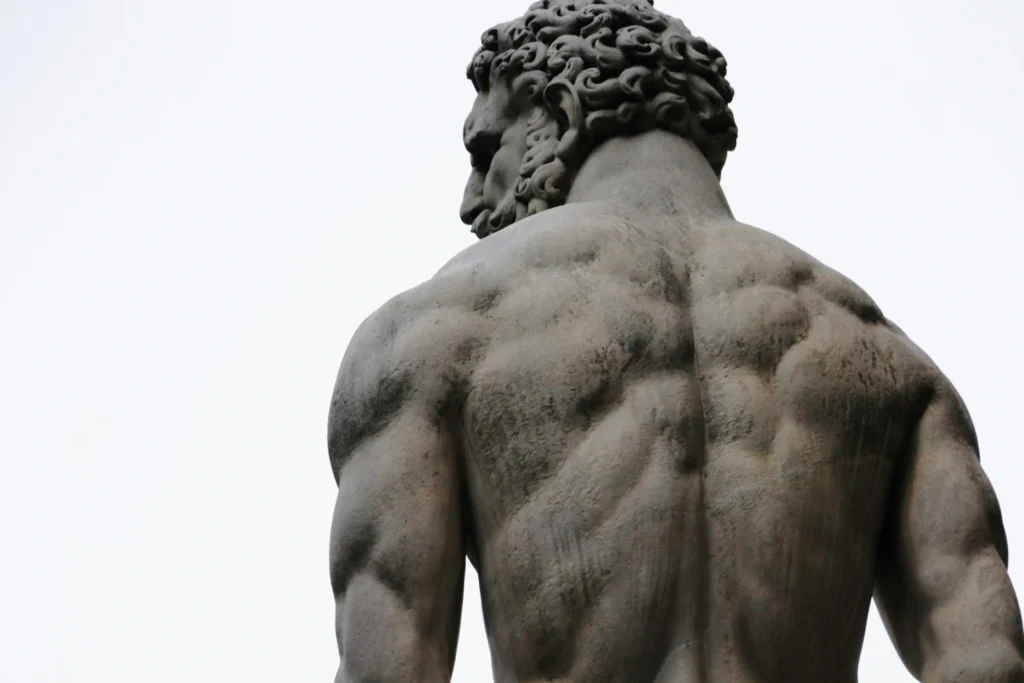
Authentic Masculinity: Strength Ordered To Love

The Silent Struggle of Men: Finding a New Strength

When God Feels Far: Why You Feel Abandoned and How to Find Him Again (Part 2)

When God Feels Far: Why You Feel Abandoned and How to Find Him Again (Part 1)

Healing Trauma: With Psychology and Faith (Part 2)

Healing Trauma: With Psychology and Faith (Part 1)

Healing Scrupulosity and OCD: A Proven Path of Faith

The Truth About Anxiety: One Size Doesn’t Fit All
Breaking Free from Shame: The Power of Faith and Psychology

Mind and Spirit: From Brokenness to Calling
Have a question? Want it answered?
Submit your question below and it maybe answered on the Mind and Spirit Podcast and in this Blog. If you’d like a personal email response, please include your email.*
*Please note: Submitting a question through this form does not constitute therapy, nor is it intended to. It does not establish or initiate a therapeutic relationship. Learn more in our Privacy Policies.
Follow me on Instagram and Facebook or subscribe to the blog for weekly encouragement.